 11
11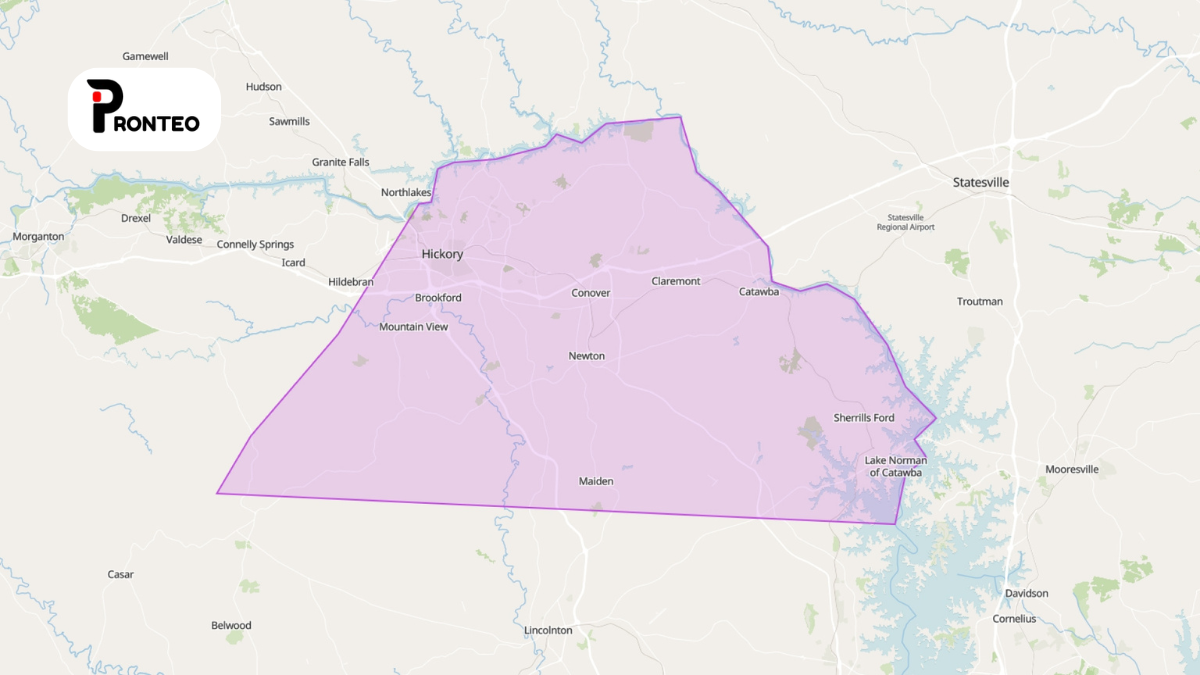
Geospatial information systems — often shortened to GIS — play an indispensable role in today’s data-driven world. When you hear Catawba County GIS, you’re referring to more than an interactive map: it’s the backbone of how property data, planning, public services, and geographic insight are organized for one of North Carolina’s most dynamic counties. Whether you’re a homeowner checking parcel information, a planner evaluating land use, or a local business looking to analyze site data, understanding this GIS can unlock clarity, accuracy, and opportunity.
In this article, we explore Catawba County GIS from the ground up: what it is, how to use it, why it matters, and how its datasets support residents, businesses, and government workflows. This isn’t just a map — it’s a comprehensive system informing real decisions and everyday life.
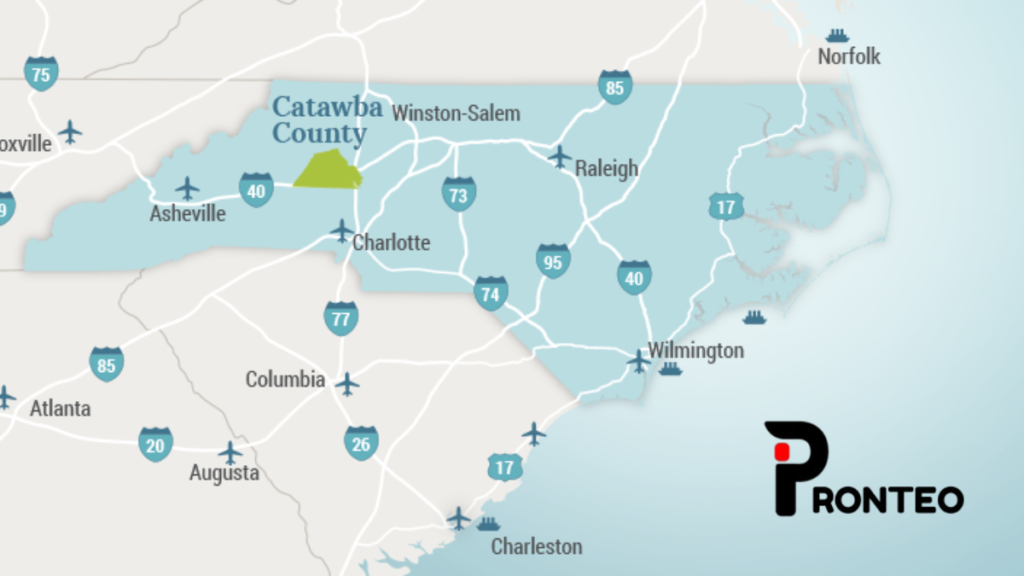
GIS stands for Geographic Information System — a framework for collecting, managing, and analyzing spatial data. Catawba County GIS specifically refers to the geospatial services managed by Catawba County, North Carolina, which provide detailed geographic and parcel-level data to citizens, businesses, and government organizations. These services help visualize real estate boundaries, locate addresses, assess land use, and support planning functions across the county.
At its core, Catawba County GIS is more than a digital map. It’s a public service tool with mission-driven support to enhance transparency, facilitate commerce, and support governance. It empowers users with tools such as real estate reports, address locators, and interactive parcel searches. When a county invests in its GIS infrastructure, residents and stakeholders gain access to reliable, up-to-date spatial data — essential for planning, economic development, or simply understanding your property.
tools is free and user-friendly. The catawba county gis portal gives the public real estate maps, parcel reports, regional address search tools, and location finders all in one place. These intuitive web applications tally thousands of searches annually and cover everything from school locators to parks and voting district maps.
Most GIS tools are available directly on the online platform, with options to print or download data for offline use. Aerial imagery, parcel boundary details, and data extraction services allow users to customize reports based on geography, land value, or property type. While some tools are optimized for desktop usage, others are mobile-compatible, ensuring local stakeholders can access mapping data on the go.
Within the Catawba County GIS portal, several key components serve different user needs. These include parcel searches, datasets, address finders, and interactive maps. Each component plays a distinct role: parcels show property boundaries and ownership, datasets deliver raw data for analysis, and address finders help locate specific geographic points.
Many users begin with the real estate search tool, entering an address or owner name to retrieve map layers, parcel numbers, and legal metadata. Beyond that, tools such as daycare or school locators add real-world context for families, while code compliance reporters help streamline municipal workflows.
One of the great strengths of Catawba County GIS is public access to its raw datasets. These datasets are compiled and updated regularly to reflect the latest geographic and property information. They are available in .CSV and shapefile formats for use in GIS applications or online analysis platforms.
Here’s a snapshot of the types of GIS datasets available:
| Dataset Category | Format | Use Cases |
| 2ft Contours | Shapefile | Topographic visualization |
| Assessment Data (Residential & Commercial) | CSV | Property valuation analysis |
| Cell Phone Towers | Shapefile | Telecommunications planning |
| Cemeteries | Shapefile | Public research & heritage mapping |
Datasets like these make it possible for professionals to build custom spatial models, for educators to teach real-world geography concepts, and for entrepreneurs to research potential site characteristics.
Whether you’re a property owner or land-use professional, Catawba County GIS offers robust real estate mapping capabilities. Parcel maps show the geographic footprint of individual properties, including dimensions, acreage, and jurisdictional boundaries. These maps are essential for understanding ownership and land use patterns.
Under the hood, parcel reports tie mapping data to legal and tax information, showing deed references, ownership histories, and calculated values. Real estate professionals, attorneys, and surveyors often consult these reports for due diligence or legal clarity. The portal also integrates aerial imagery to give users a visual context beyond lines on a map.
Not all mapping needs are about boundaries. Address finders within Catawba County GIS help residents and businesses pinpoint exact locations in the county. These tools leverage geocoding techniques to match addresses with spatial coordinates, aiding everything from emergency response planning to delivery services.
Similarly, specialized locators — whether for schools, parks, or voting precincts — use the same underlying geospatial framework to help residents quickly find key local resources. These features improve civic engagement by making it easier to locate community assets and understand geographic context.
Behind the scenes, Catawba County GIS benefits from a collaborative effort called the GIS Consortium. This partnership includes local municipalities and planning organizations that contribute resources, share data, and help maintain consistency across geographic datasets.
By bringing together cities such as Hickory, Newton, Conover, and Maiden, the consortium ensures that spatial data reflects cohesive regional characteristics instead of siloed municipal snapshots. The result is a more accurate and reliable GIS infrastructure that serves the entire county.
A powerful quote from a GIS professional sums up the value of systems like Catawba County GIS:
“GIS does more than show where things are — it helps explain why things happen there and what might happen next.” — GIS Analyst
This insight speaks to the practical impact GIS has on planning and development. Local planners use parcel and zoning layers to evaluate proposals, environmental analysts assess land characteristics, and emergency services map response zones. GIS provides a unified lens through which complex data becomes usable intelligence.
Every municipal and county department — from Environmental Health to Economic Development — can tap into GIS to answer spatial questions that drive policy, infrastructure investment, and community services.
To get the most out of Catawba County GIS, it helps to approach the system strategically:
Start with Clear Questions: Know whether you need ownership details, topographic data, or address locators before diving into the tools.
Combine Datasets: Download raw files to merge parcels with contour data or demographic layers, enabling deeper analysis.
Understand Limitations: GIS data reflects recorded information but may not capture every on-the-ground detail like legal surveys. Always supplement with professional expertise where needed.
By using the system thoughtfully, both novice users and GIS-savvy professionals can unlock actionable insights.
A familiar misconception is that GIS is “just maps.” In reality, systems like Catawba County GIS integrate multiple layers of information — spatial geometry, legal records, valuation data, and more — to create a rich, analytical ecosystem.
Another myth is that GIS data is static. On the contrary, the GIS team regularly updates aerial imagery, parcel boundaries, and ownership records to reflect recorded deeds and plats. This continuous updating keeps the system relevant for planning, property analysis, and public service needs.
The Catawba County GIS is a powerful public resource that transforms raw data into meaningful geographic intelligence. From parcel mapping and address locators to downloadable datasets and collaborative planning tools, GIS supports transparency, efficiency, and decision-making across the county. By engaging with the system — whether you’re a resident, professional, or student — you tap into a network of spatial insights that inform real-world outcomes.
Catawba County GIS is used to view property boundaries, access parcel reports, locate addresses, and retrieve geospatial data for planning and public services.
You can search the county’s GIS portal by address, owner name, or parcel ID to access maps and details about your land.
Yes, many Catawba County GIS datasets are publicly available and downloadable in formats like CSV and shapefiles.
Yes — aerial imagery from recent and past years is integrated into the GIS tools for visual context.
Absolutely; businesses use GIS for site analysis, market research, and geographic planning based on property data and demographic layers.
Also Read: mercury mountaineer